
Trust as a Leadership Practice
The April 2026 W.K. Kellogg Foundation (WKKF) fellows gathering in Washington, D.C. highlighted the role of trust in leadership. Fellows explored how building trust can enhance individual growth and drive equitable community outcomes. We spoke with two pairs of accountability partners on the role of trust in their work and communities: how they build it and maintain it and why it is an essential part of creating an equitable future for children and families. The first pair of accountability partners included Elizabeth Schultheiss from Michigan and Sarah Sattlemeyer from Washington, DC; the second pair of accountability partners included Sia Y. Magadan from California and Yaha Aguilera from New Mexico.
It starts with trust
The four fellows were strongly aligned on a key point: Without trust, the work in community cannot happen. Yaha said, “Trust is everything in a partnership because there’s no way that somebody will work with you if they cannot see you, understand you and read your intentions.” Sia said, “You have to build rapport with the people you serve. If they can’t know you and your values and know that you understand what is important to them, they can’t follow you.”
In her work with community foundation grantmaking, Elizabeth has learned that, “Without trust, you’re not going to necessarily hear community voices the way that you need to. If people don’t trust you, are they going to tell you the reality? Are they going to be vulnerable? It takes all these elements to establish trust. Without them, you won’t be able to get everyone represented at the table. You have to be vulnerable, open and transparent. You have to really intentionally work to build relationships so that you can get honest feedback. You need that feedback to amplify community voices.”
Reflecting on the role of trust when working at the national policy level, Sarah said, “Building trust can be especially hard when some partners have the opposite viewpoint on an issue.” For Sarah, tools like Paul Martinez’s Trust Dynamic 360™ process enables tough conversations and moving toward alignment. Yaha shared a trust building example from her work serving the Navajo Nation. “It took me a year to get in with the Nation because I needed to gain trust from the community,” she said. “One person let me in and it took me a year of meeting her at the times and places she wanted, just showing up and showing that my team and I care.”
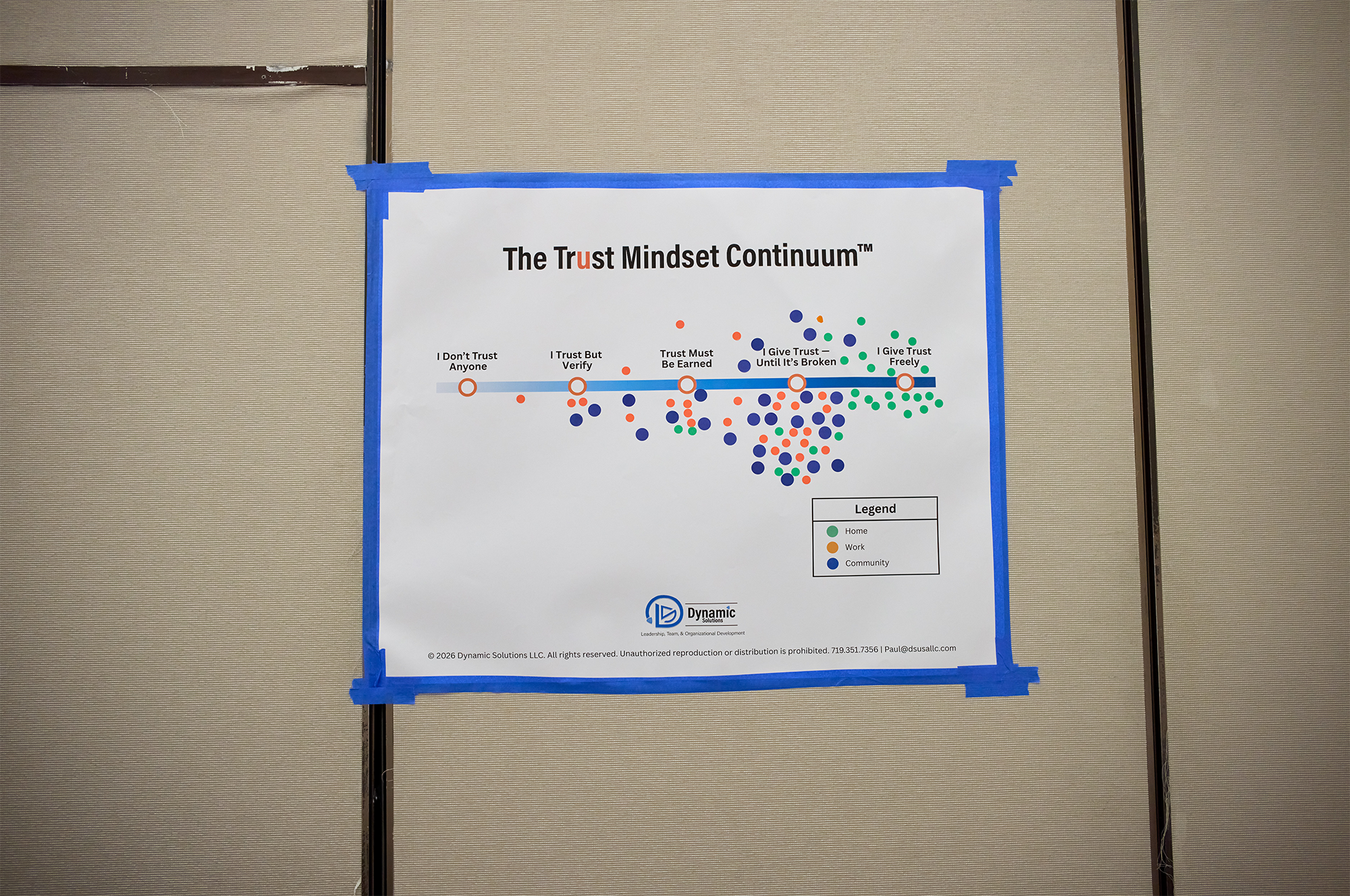
Fellows considered their personal trust levels during the session on building trust.
The challenges of building and maintaining trust
The fellows all acknowledged that building trust is difficult, but maintaining it can be even more difficult. Elizabeth noted the general lack of trust in systems today and a paradox of leadership. “How do you get somebody to trust you when you are part of the thing that they’ve grown not to trust?” she said. “I may be able to get somebody to trust me as an individual, but they still may not trust the institution I work for.”
Sarah noted that it’s really a matter of consistency. “Building trust is necessary but not sufficient. It’s the starting point,” she said. “I think what’s really hard over time is also maintaining trust, continuing to show up, being vulnerable, being transparent and being a good partner.”
Sia shared that one of the biggest challenges she faces is time. “Building trust requires time, which is something people don’t have a lot of. People often underestimate what will be required of them to build trust and accomplish their goals,” she said.
Yaha agreed, noting that one rarely sees time in budgets for trust building, though she had seen an example from a project in Canada where community trust building had a time and budget allocations for the work.
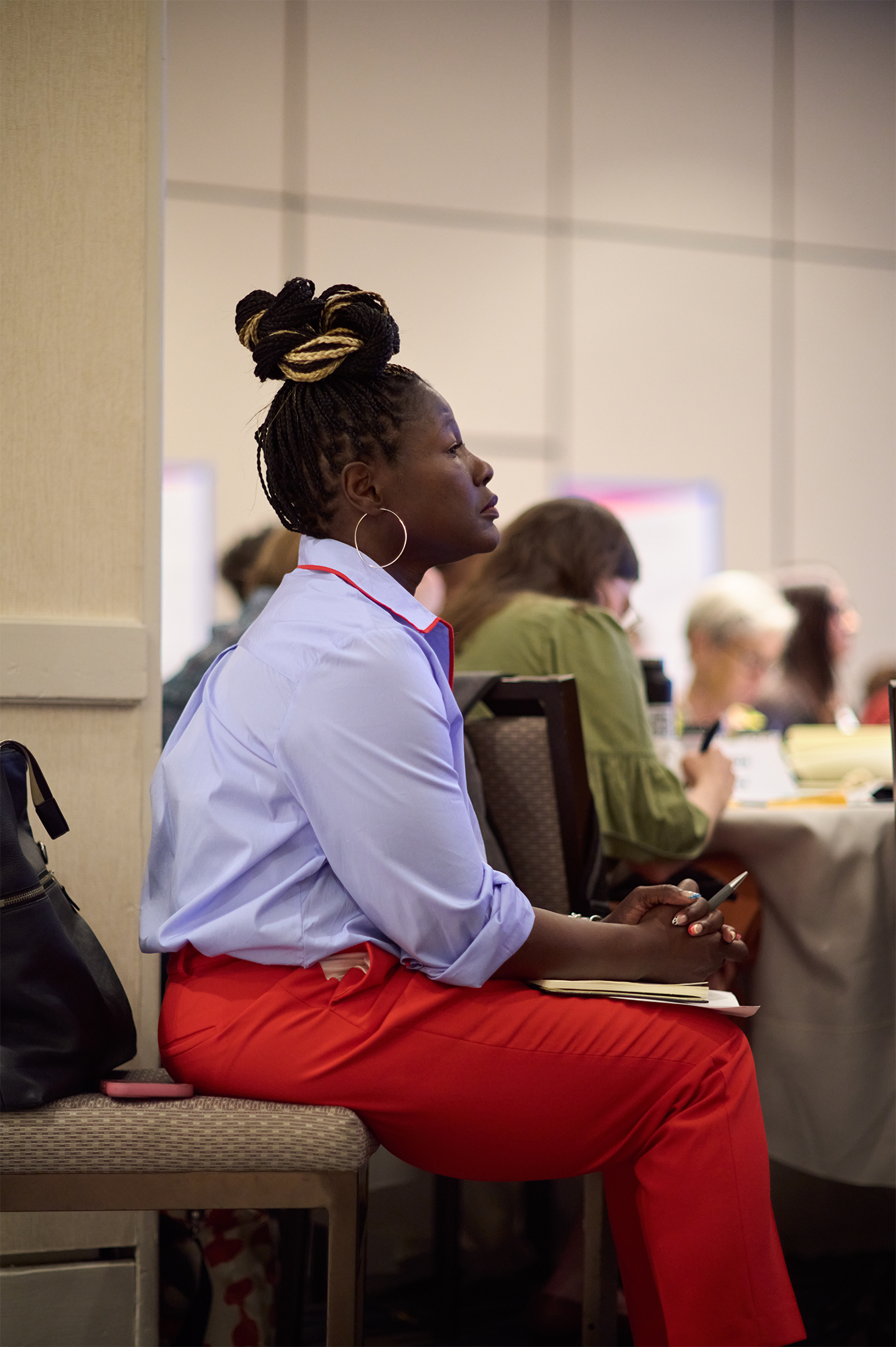
Sia Y. Magadan listening intently to one of the presentations.
What the fellows have learned about themselves
Sia has learned to, “trust my gut and show up consistently across settings. Who I am as a leader is who I am as a sister and a friend. I bring all my humanity to the work. Often, leaders lack empathy and jump right into the agenda without pausing to simply ask how people are.”
Sarah said, “I’ve struggled to realize that people who are willing to have tough conversations with me and allow me to have tough conversations with them are demonstrating trust. It’s about showing up authentically, but also pushing back when you don’t agree or when there’s something that needs to be called out. I also want to emphasize that trust is not synonymous with agreement. We need tools to build bridges between alignment and disagreement.”
Yaha described her personal journey of learning to trust as showing up as her full self. “I had an issue because I’m gay and I work with a lot of communities that don’t like that,” she said. “So, at the beginning, I didn’t say anything, but it kind of shows and nobody says anything. Then, I started learning about Indigenous communities and how they see gay people as two-spirit. Historically, two-spirit people were wise healers and medicine people. I realized that Native people understood and valued the whole me and that I could be myself with them.”
The Trust Dynamic 360™ process helped Elizabeth see that she doesn’t always delegate enough and that her team doesn’t feel like she fully trusts them. “I would have liked to think of myself as a trustworthy individual. I try to show up, I try to be transparent and I try to be honest and direct,” she said. “But I realize it’s not necessarily about my intentions, it’s actually how I’m received by other people in the moment. Am I vulnerable enough to share my personal self with people? Am I willing to give up work and trust that somebody else is going to do it as well as I would do it? I’m learning that it’s not about being the expert and trusting the content I’m sharing. It is also about stepping back and creating space for others and really leaning into listening to understand.”

Class four fellows participating in a group activity.
The role of trust in creating an equitable future for children, families and communities
Sarah underscored that trust building is an incredibly long-term endeavor and key to creating systems change. “The trust building process is not always noticeable. It can be quiet,” she said, “but you’re not actually setting yourself up for long-term program success, policy success or community development success unless you’re starting from a place of trust.”
Sia said, “Families and communities have to feel like there is a person who not only understands their context but also has an understanding of the systems and how to best get those systems to work together for the benefit of the family. Families have to feel like we see them, we understand them and we’re going to speak for them and advocate on their behalf.”
Sharing the anthem, “Nothing about us without us,” Elizabeth identified a fundamental shift in moving from working for communities to doing work with communities. “If you’re not engaging with people, hearing their voices and lifting their voices up, how are you ever supposed to address inequities?” she said.
Yaha closed the session with a story that captured a powerful truth about trust. “I attended an end-of-summer celebration and a child I didn’t recognize came up and said, ‘I knew you were going to be here.’ I was surprised that he recognized me. It was one day of showing up, being there, committing to it. He expected me to be there and I was. It’s a show of respect,” she said.
For these fellows, trust does not only require showing respect, it is the foundation on which their community work is built. Building it necessitates vulnerability, consistency, and patience — showing up one conversation at a time, over and over, with deep care and commitment.
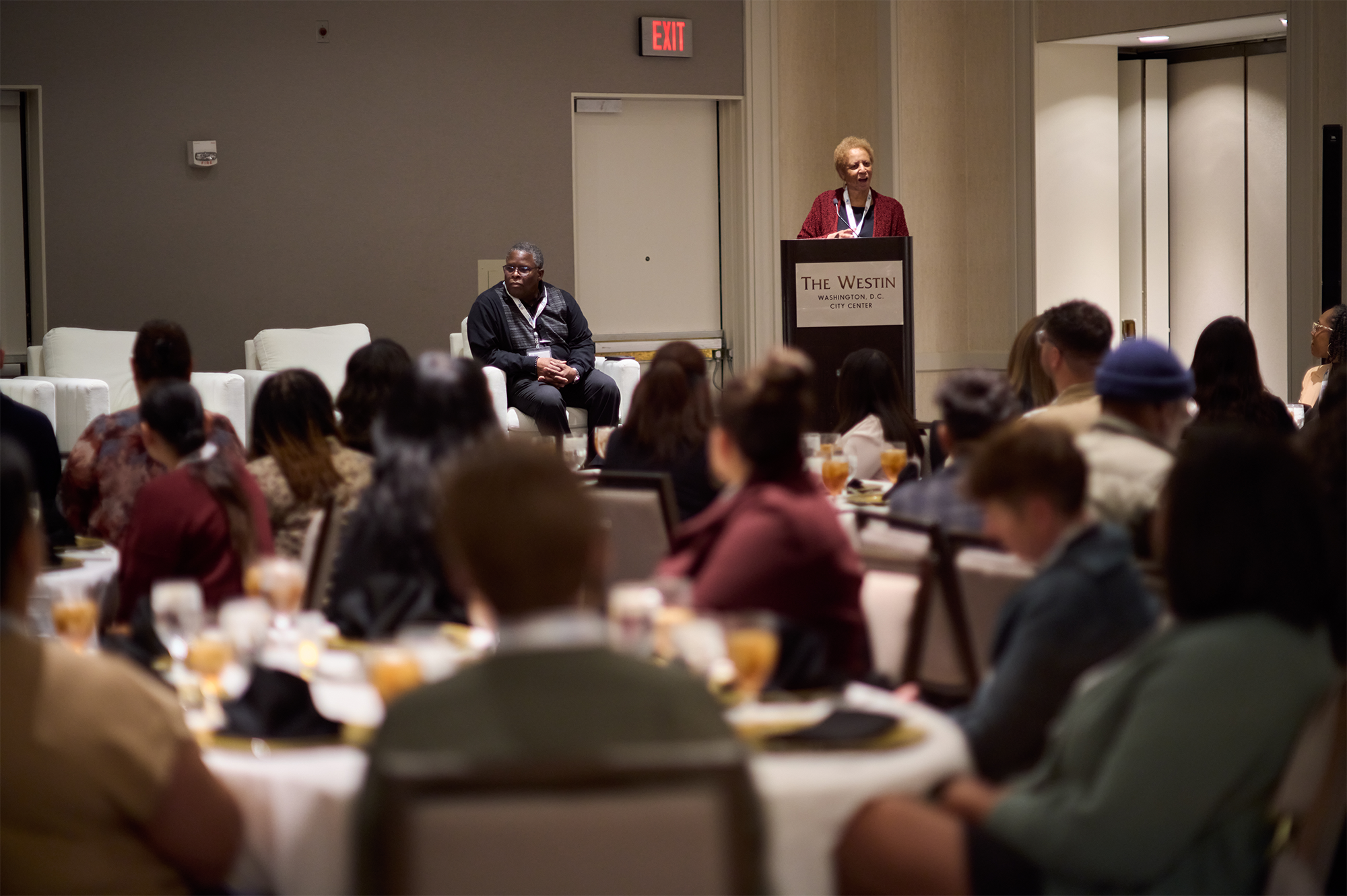
Class four fellows participating in a session at the gathering in Washington, D.C.