
Three-Month Reflections
Three months into class four of the Community Leadership Network fellowship, we interviewed five fellows from around the country to share what they have learned so far. Several noted the shift from focusing on learning new leadership skills to considering who they are as leaders—a process that requires them to slow down. The fellowship has given them a chance to take that time, as well as engage with assessment tools like the Center for Creative Leadership’s DAC framework, which stands for Direction + Alignment + Commitment, and the Myers-Briggs Type Indicator (MBTI) to support reflection on their leadership skills and potential for growth.
Learn more about the fellows’ journey from Yaha Aguilera, New Mexico state director for Save the Children; Jakki Bungart-Bibb, director of Michigan Works!; Hallie Casey, partnerships director for The Common Market Texas; Tracy Galloway, founder and executive director of Galloway Family Farm & Education Center, from Mississippi; and Percy Marchand, founder and CEO of IMPACT504, from Louisiana.
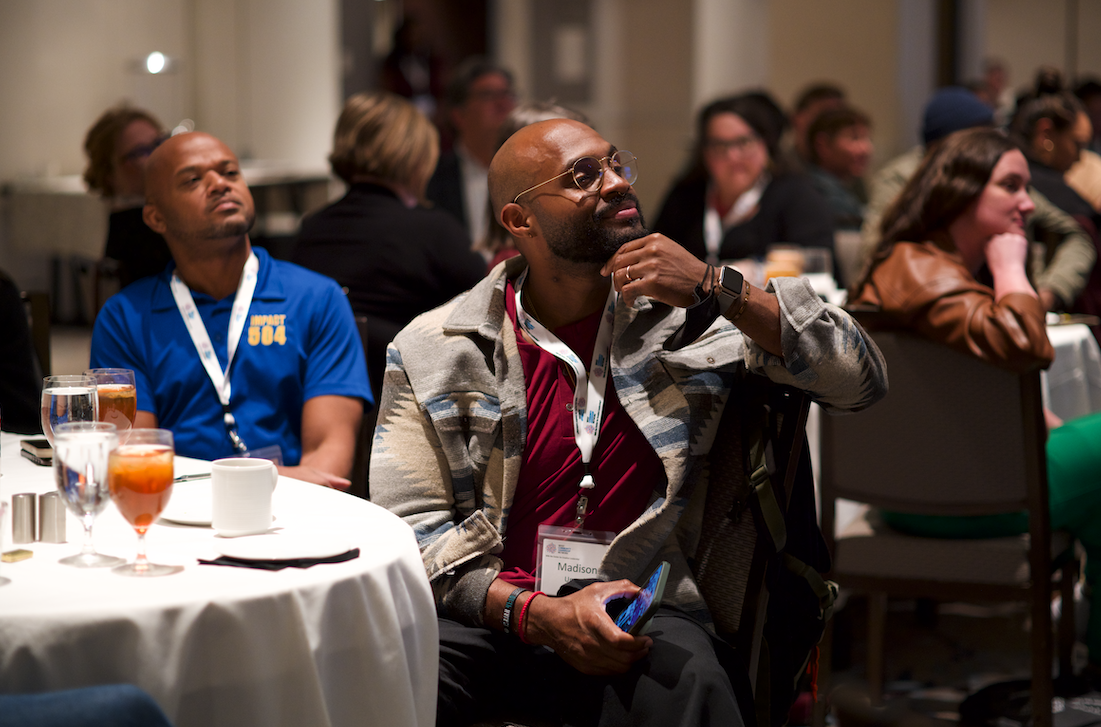
Percy Marchand at the Washington, D.C. gathering.
Leadership strengths discovered
Some fellows are focused on developing new leadership skills. As a “big time extrovert,” Tracy is blending his servant leadership approach with active listening. “I’m often in my head processing and thinking, ‘I need to slow down and really listen, especially to children,’ which takes a lot of patience.” As a grassroots leader, Percy is learning to balance swift response to emergent community needs with strategic insight. “It’s like going to the gym and hopping around from machine to machine — it can be effective, but I’m more effective if I have a plan and focus on where I can make a larger impact.”
Others are concentrating on authenticity and deepening existing leadership skills. Yaha shared the power that has come from being true to herself: “It’s been so transformative to give up trying to be like the people I serve and instead just being myself as a gay, Hispanic woman.” Jakki has always known she possesses emotional intelligence, but comes from a place where it wasn’t appreciated. “People see it as a soft skill, but in the last months I’ve recognized that it’s not only a good leadership skill, it’s a leadership superpower. It allows me to listen deeply, navigate different perspectives and build trust across partners.”
In reflecting on personal feedback she received during a session on the key role trust plays in personal leadership, Hallie was surprised to see integrity named as one of her key leadership skills. ”I don’t think I’ve often reflected on the role of integrity in leadership because they feel so intrinsically related to each other. Really digging in and hearing from my coach and from my community about it being an asset and how I can build on my ability to create change was really helpful.”
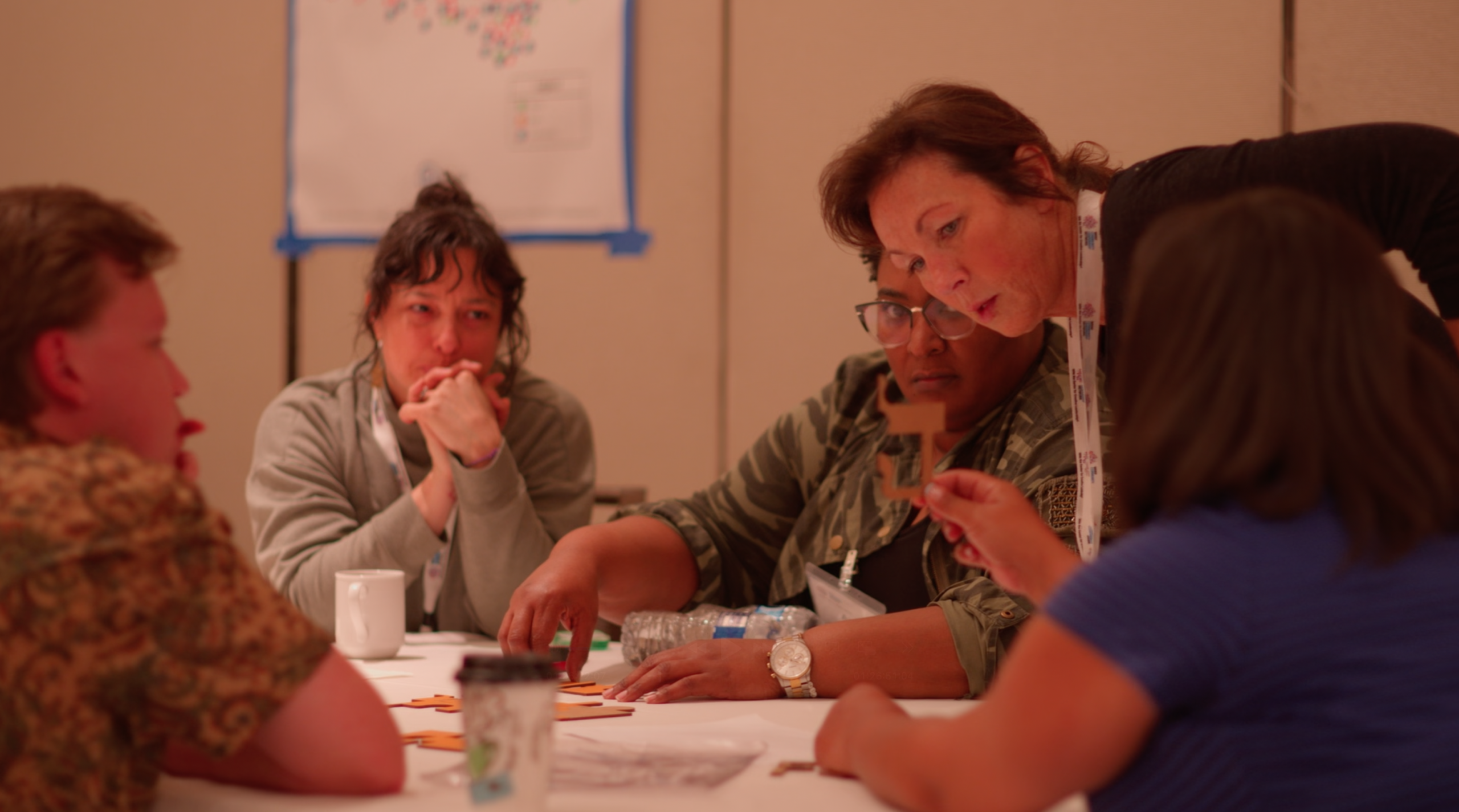
Jakki Bungart-Bibb participating in a group activity with fellow fellows.
Leadership style and collaboration
Moving from self-reflection on their leadership style to putting it into action in collaborative settings has been an eye-opening experience for the fellows.
For Jakki, revisiting the MBTI after 20 years and learning she was an extrovert came as a surprise. “I’ve never thought of myself as an extrovert, but in trusting relationships I see it come out. It reminds me to be open and just listen and learn before stepping in and asserting my point of view.” Yaha also had a realization about introversion and extroversion in working with her team. “I tend to want answers right away and realize my team wants time to process. I can provide my questions in advance so they have time to process and come back to me. I can also be in silence and let them think, which I wasn’t doing. I wouldn’t have gotten there without the assessment.”
Percy, who has always looked for middle ground in collaborations, said “Everybody isn’t meant to be a partner and everything isn’t going to work. And it’s okay if it doesn’t. You’re better off finding that partner who does work with you as opposed to spending too much time trying to make something work that’s oil and water.” Showing similar awareness, Hallie noted that “leadership is knowing other people’s strengths, what you’re coming to the table with and other people’s weaknesses that you can help them build or you can work around.” Tracy reminded us that it’s also key to know our own weaknesses as leaders.
On direction, alignment and inspiring commitment
After being introduced to DAC at the first gathering, two fellows have already been testing it in their work with other organizations. Hallie is the co-chair of a policy coalition that has been 10 years in the making. When another coalition emerged working on a similar issue, “the framework was useful in identifying that the new group had a lot of commitment and my group had a lot of direction — together we’re working on building alignment and hope to get the policy passed.” Jakki is applying DAC to a seven-year-old workforce development consortium funded by WKKF that has seen a lot of leadership change. “Setting direction by clearly anchoring our work in a shared vision and ensuring alignment by bringing the partners together around the vision holds us accountable. This is the first time I’ve really felt momentum because we have the right people at the table with aligned vision and commitment.”
The remaining fellows have applied DAC internally. Tracy’s direction-setting took the form of an organizational pivot in which he stepped away from managing his farm day-to-day and turned that role over to his wife. Yaha worked with her team on alignment and cohesion from the beginning. “My team is very communicative and early on they asked for role clarity and the opportunity to participate in trainings. I committed to a year of learning their roles, taking trainings, then I stepped back and let everyone lead in their areas of responsibility. It’s the best thing I’ve done as a leader.” DAC made Percy realize his board and staff were committed but they “weren’t necessarily seeing the overall picture of how everything fits together. I need to do a better job communicating with the team and keeping the board abreast of how pieces of the work fit into the bigger plan and how we’re going to achieve the plan.”
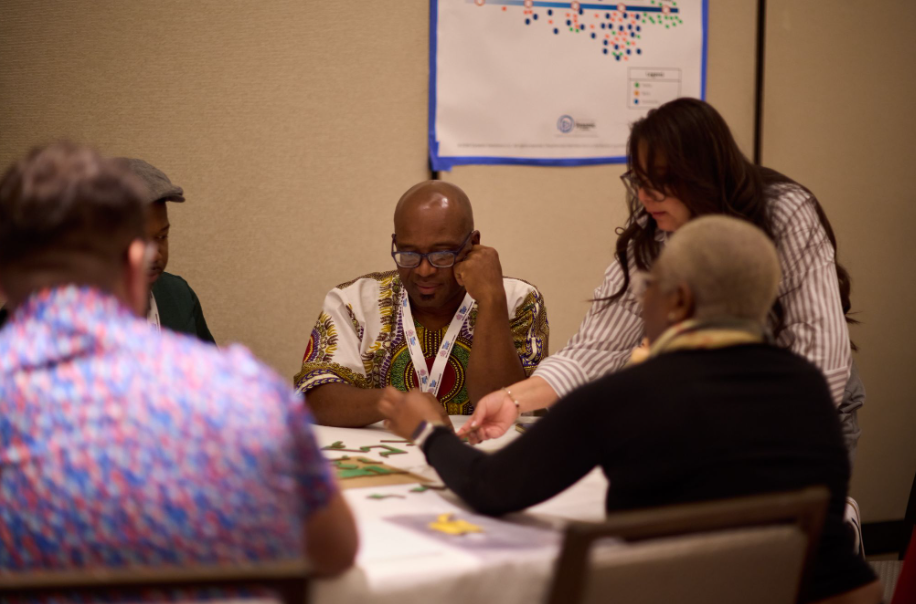
Tracey Galloway participating in an activity with other class four fellows.
Looking ahead
When asked what they’re most curious about at this point in the fellowship, all five fellows acknowledged that growth is a process and they are eager to see who they become. Thirty years into her career, Jakki pointed out how enlivening it can be to simply be around new, innovative people, while Percy is focused on “being my true and authentic self, developing true and authentic relationships.” Hallie hopes to “build my own ability to inspire, motivate and organize others to increase my impact and grow the work of serving children and families in Texas more quickly.” Yaha noted it’s been an emotional rollercoaster so far, but she’s committed to showing up and is curious to see what leadership changes stick and where she might return to past behaviors.
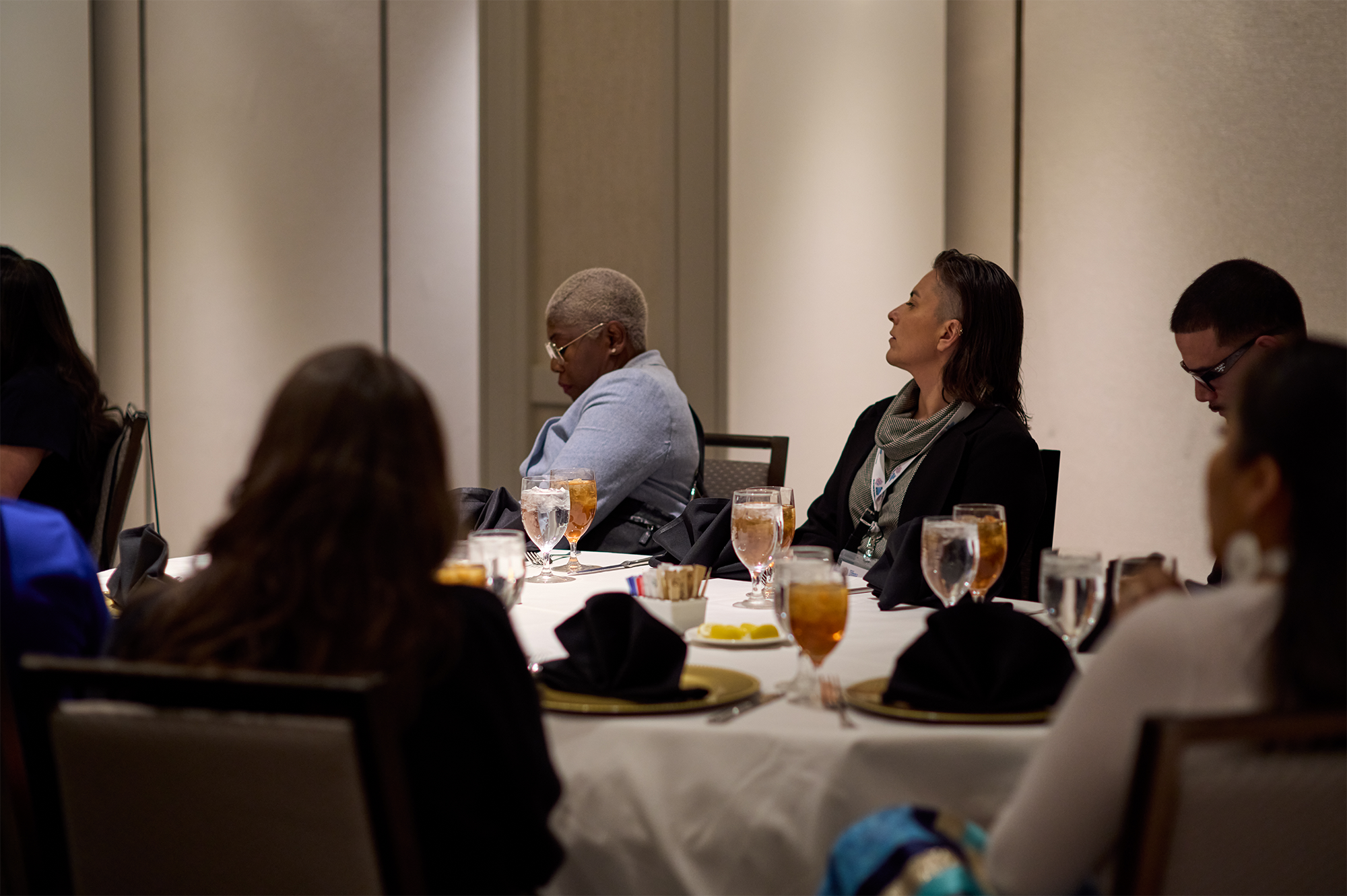
Yaha Aguilera and other fellows during a session at the gathering in Washington, D.C.
Tracy made an invitation to all the fellows: “CCL and WKKF are not just engaging us, they’re bringing out the true you. Take off your mask, your hat and your title. Be engaged. Be here. Be in the moment. Eighteen months down the road, we’ll be different people.”
Three months into the fellowship, these fellows have already gained new insights into their personal leadership styles which are informing how they show up in their community work. They’re also incorporating new frameworks like DAC into their work with community, coalition efforts and within their own organizations. As they look ahead, all five are eager to see how they evolve as leaders, what partnerships form and how they will further inspire commitment to children and families in their communities.